Each level goes further than the last. A child moves up as they grow, not on a fixed date.
The fifteen topic areas stay the same all the way through. What changes is how far a class goes into each one, and how much of the thinking the children do for themselves.
Level 1Starting out
Level 2Going further
Level 3Going deeper
Level 4Current affairs joins, from around nine
Message us with your child’s age and we will tell you which level suits them.
Level by level
The same world, met four times, each time with more of it in view.
Level 1
Starting out
Stories, pictures and things to hold. A child meets the planets, the body, animals and the map of India for the first time, mostly by looking, touching and talking about what they see.
Why is the sky dark at night?
Level 2
Going further
The same topics, one step deeper. Children start to sort and compare: which animals live where, and why; what a flag is for; what makes a festival a festival.
Why do we have so many festivals?
Level 3
Going deeper
Reasons and connections. How a river shapes a city. Why one invention changed everything that came after it. Children begin to argue a point, and to back it up.
Who decided the week has seven days?
Level 4
The world right now
Everything above, and current affairs. From around nine, children follow what is happening in the world, ask what it means, and trace where it came from.
Why is everyone talking about this?
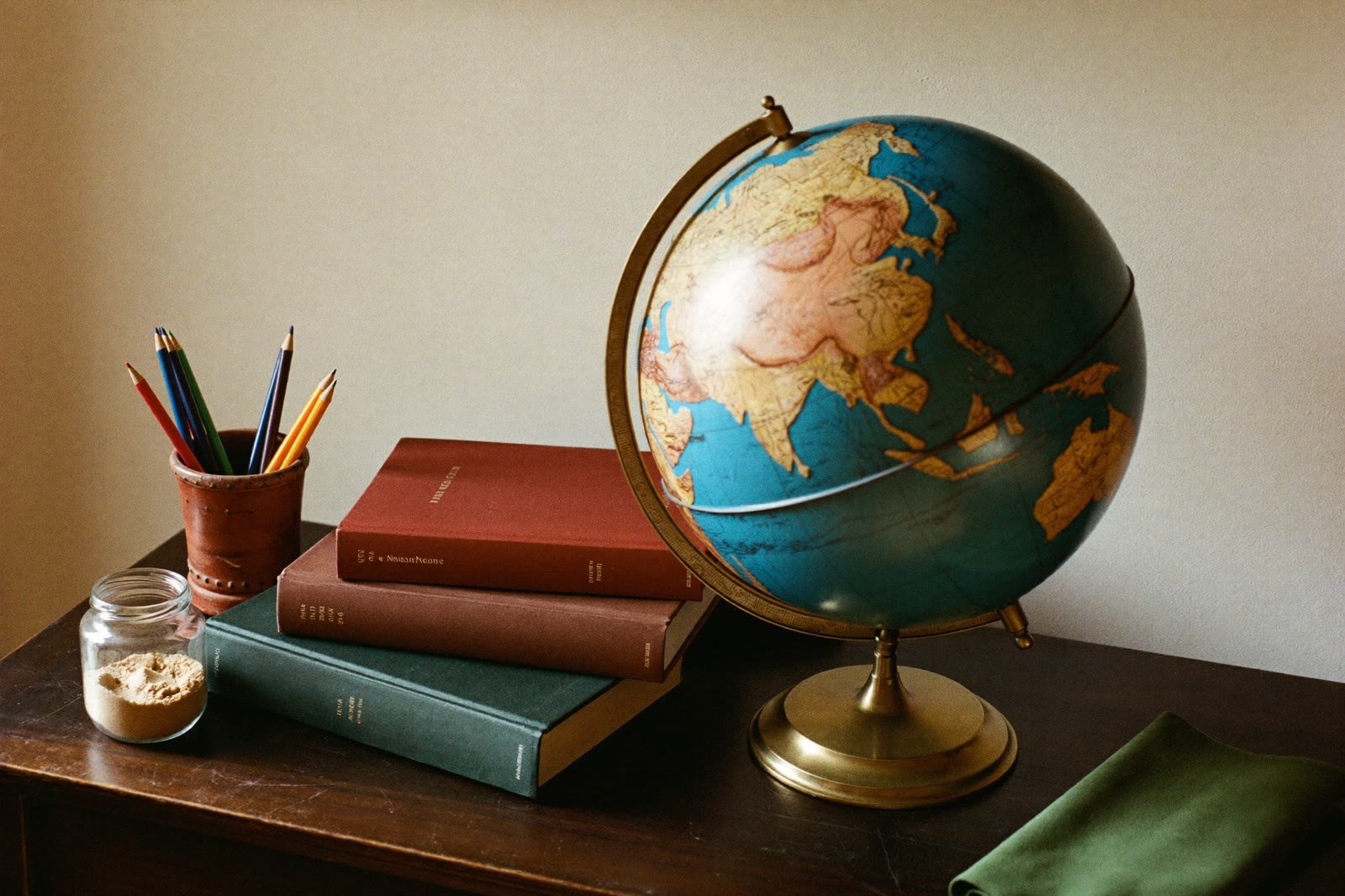
A globe, an atlas, a jar of sand. Most classes start with something you can hold.
The kind of question a class starts with
Why do rivers bend?
Who invented zero?
How does a bee find its way home?
Does zero really count as a number?
How did Nike and Google begin?
We do not hand over the answer straight away. We follow the question, and see where the child takes it.
The fifteen topic areas
Grouped by theme. Every level visits all fifteen; a Level 1 class and a Level 4 class on the same topic look very different.
Science and the natural world
Space and scienceMissions, planets, the universe, discoveries
The human bodyHow it works, health, vaccines
Animals and natureBehaviour, adaptation, habitats
India and the world
All About IndiaStates, monuments, culture, history, achievements
World geographyContinents, countries, capitals, maps
World cultures and festivalsHow people live, celebrate and eat around the world
World organisationsWho they are, what they do, why they exist
History and civilisationAncient societies, empires, and how we got here
People and ideas
People who changed the worldThinkers, innovators, change-makers
Great Indian scholarsThe minds behind India’s mathematics, science and ideas
Entrepreneurs and visionariesPeople who saw something nobody else did, and built it
Stories behind great brandsHow Nike and Google began
Achievement and sport
Awards and achievementsThe prizes, the records, and the people behind them
Olympic sportsHistory, rules, athletes
The world right now
Current affairsFor our older learners, from around nine
How a topic is taught
Every topic, at every level, runs the same way. The depth changes; the shape does not.
It opens with a question.A map on the floor, a jar of sand, a photograph, or an argument about whether zero really counts as a number.
Then a story, or something to hold.Information arrives as a story, a game or an object, so it turns into understanding rather than a fact to be repeated.
Then the children talk.They disagree, connect it to something they already know, and ask things we had not planned for. That is the class working.
Then it goes home.A child leaves with a better question than they arrived with, and usually asks it again at dinner.
What we do not do
We do not lecture. We do not teach a topic so that it can be recited back. We do not rank children against each other. The measure of a term is whether a child’s questions are getting better, and whether they now speak up before they are certain.
How it runs
At a centreOnline
One session a weekAt a centre, or online.
1 hour, or 1.5An hour for children under seven. Up to an hour and a half from seven.
10 to 15 childrenUp to ten under seven. Small on purpose.